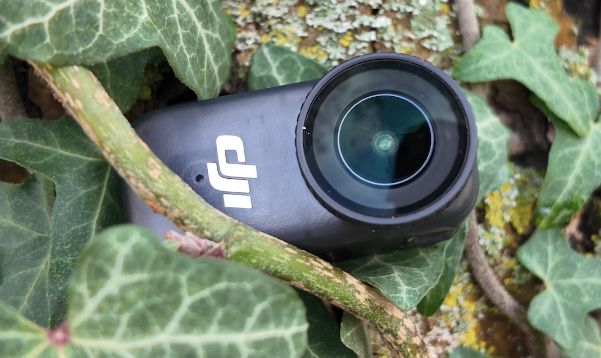
Small, durable, great video quality, and easy to use.
That’s what a modern action camera should be.
And the DJI Osmo Nano… almost gets there.
In this post I’m sharing my long-term experience: what I loved, and the issues I ran into (overheating, wireless drops, and more).
(Not sponsored. I bought the camera myself—this is my honest take.)
The Good Stuff
Accessories
You get a lot—and they’re actually useful.
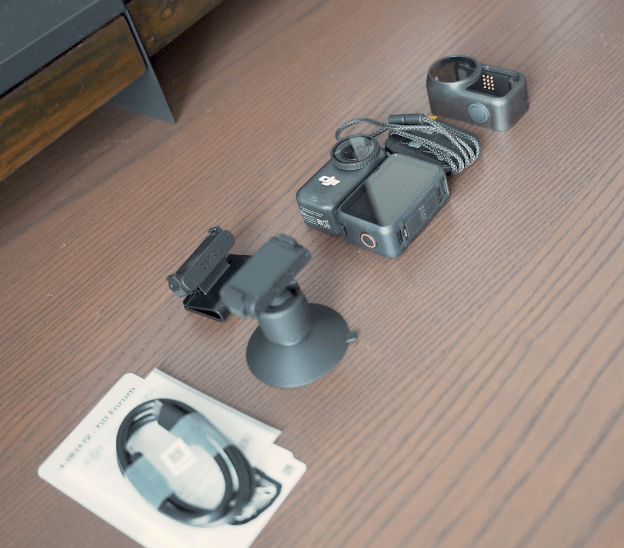
- Protection case
- Suction cup (windows, glass, etc.)
- Tripod compatibility (just unscrew one part)
- Magnetic pendant (chest mount)
- Hat clip
All of this is included—no extra cost. The camera module is magnetic on both sides, so you can stick it to any metal surface when you don’t want to bring mounts.
Design
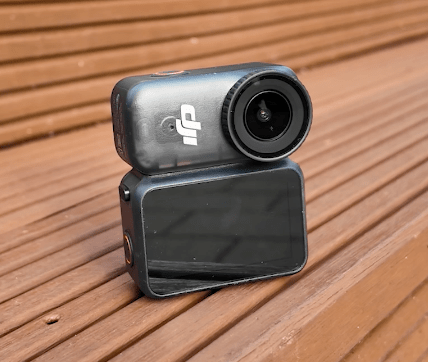
Two parts:
- Vision Dock with screen, SD slot, and USB port
- Camera module, which is tiny—AirPods tiny—and that’s a huge plus.
When your camera is this small, you have no excuse not to bring it: morning jog, grocery run, walk in the park—it fits anywhere. The removable lens cover and case make creative angles easy. It’s surprisingly durable too; mine survived dozens of drops and still works like new.
Battery & Storage
- Camera module: ~1 hour of 4K video
- Storage: 64 GB fits roughly an hour; I recommend 128 GB for peace of mind
- Catch: no expandable storage; footage first records to internal memory. You can copy to the SD card only after docking—don’t forget, or you’ll hit “memory full” mid-shoot (been there).
The Vision Dock also charges the camera. Together they give ~3 hours of shooting. Both batteries are built-in, but fast charging helps: 0→80% in ~24 minutes, full in ~50.
Controls & Usability
- Customizable buttons (single and double press) on both dock and camera
- Startup time: under 1 second—consistently fast
- Wireless range: DJI claims 5 m; in my testing it’s closer to 3 m
- Magnets: connection feels great—clicks firmly into place (my new fidget toy)
- Weight: camera 52 g, dock 72 g
- Screen: bright enough for sunny days; no issues in any weather
- Nice touch: pick up the Nano and the display shows remaining battery
Image Quality
This is where it shines.
- Same sensor as DJI Action 5—sharp, vivid, detailed
- 4K60, 8-bit/10-bit, D-Log M 10-bit for grading
- RockSteady stabilization is excellent (turn it off and you’ll see immediately)
- Waterproof up to 10 m; great for swim training and technique review
- Easy magnetic mounting around a pool for better angles
- Slow motion: 4K120, 1080p240—perfect for sports/cinematic shots
- Timelapse: I use it for bike rides—small files, memorable results
Low light: surprisingly good for such a tiny camera—usable, not magic. I’ve got clips from a haunted-house ride and a dim car interior that still look solid.
Photos: they’re fine, but I usually pull stills from video—easier, similar quality.
(Original clips and pics linked in the description.)
Audio
Built-in mics are decent for an action cam.
For better quality, connect DJI’s external mic—just note the camera needs to be docked.
The Not-So-Great
Overheating
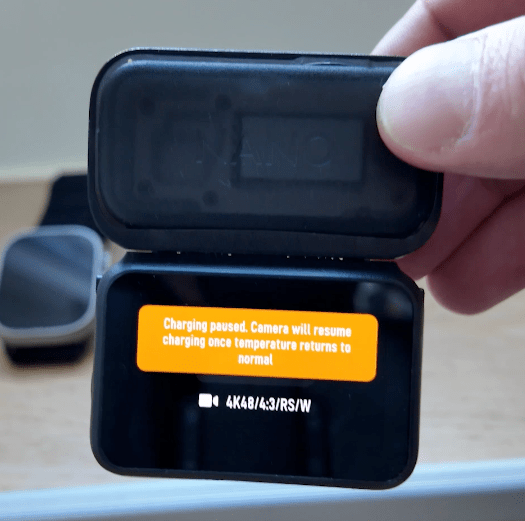
Even in cool weather (8–14°C), it overheats after 15–20 minutes when stationary. Indoors at ~22°C I consistently get a warning around the 15-minute mark. With airflow (e.g., on a bike), it’s fine.
Wireless Connection
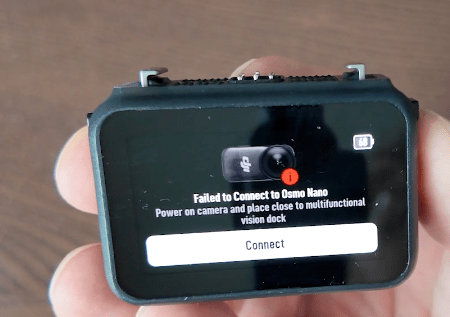
Sometimes the dock just stops seeing the camera. Dock it—works. Undock—nothing. It’s happened multiple times; reboots don’t help. The bug disappears on its own after an hour or so.
File Transfer Quirks
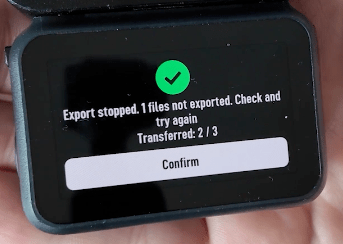
Occasionally it reports “one file didn’t copy” even though it did. Formatting doesn’t fix it. After transferring, you can’t play videos directly from the SD card—you’ll need the Mimo app or a computer.
Batteries
Built-in cells mean a limited lifespan: expect 2–3 years before noticeable degradation.
Mounting Magnets
DJI changed magnet positions. Older accessories technically fit but need extra force. The upside: new mounts attach both ways—no more guessing orientation.
Price
Two versions (Germany):
- 128 GB: €299
- 64 GB: €279
For comparison: Insta360 Go 3S — €329, Go Ultra — €429.
Given the price and what you get, the Osmo Nano is a clear value winner.
Verdict
Compact. Well built. Loaded with useful accessories. Great video.
Not perfect—overheating and wireless quirks are real—but it’s fun, reliable, and small enough that you’ll actually use it. I really like it.
Drop your thoughts or questions below. Thanks for reading—see you in the next one. 👋
 Honest Unsponsored Reviews
Leave a comment